Message from the Principal
Marise McConaghy, Principal

 Loading events...

Dear Parents and Caregivers
The term has begun well, and it is a relief that restrictions have eased as this has reduced the workload of managing COVID cases as well as those who are in isolation owing to being close contacts, not to mention affording us increasing freedom. However, the easing of restrictions has led to high levels of staff and student absenteeism owing not only to COVID but also other coughs, colds, and a rather nasty flu. The management of covering classes and keep up of normal operations is rather challenging, but we seem to be managing. Other schools and workplaces are experiencing a similar situation it seems.
Parent events continue to be very well-attended and the calendar both during the school day and out of hours is very full. Operations are – more or less - back to normal. Teachers are still working hard to keep the momentum for the work which needs to be covered while also catching students up on basic study skills and habits as well as their interpersonal capacity.
Five of our staff who presented recently at the AHISA Conference have now been invited to virtually present at the International Coalition of Girls’ Schools Conference, which is quite an honour. Following their presentations at AHISA a few weeks ago, there has been much follow-up from school personnel who were in attendance wanting more information on how we do things, particularly in Amber Sowden’s Wellbeing session. Out of only five Global Action Research Fellows chosen, two are Strathcona staff. One, Rhiannon Ward has developed a paper over the past year, and it is titled Using the Inquiry Model of Thinking to Build Confidence and Problem-Solving skills in a Middle School Girl. She will present at the International Coalition of Girls’ Schools Conference in Boston in a few weeks’ time. Liesl Woods is a new Fellow this year and will develop her paper over the coming months.
We are delighted with our new track record of Educator Awards and recently heard news of some more we have received this year. I have collated them here for your interest. The Strathcona staff are, as we know, quite amazing and I am proud of what they have been able to achieve particularly these last few years as they pivoted through a pandemic and also managed to develop and implement some fantastic initiatives.
2019
Educator Award: Best Student Wellbeing Program: Finalist and Silver Medal Winner
Educator Award: Best STEM program All Aboard the Tinker Train: Finalist and Silver Medal Winner
Educator Award: Best Overall STEM Program: Finalist and Silver Medal Winner
Educate Plus: Best Social Media Marketing Campaign: #Girls Unstoppable
2020
Council for Advancement and Support Education (CASE International):Best Publication, Silver Award Strathcourier, Malala Issue
Real Media Awards: Strathcona Publications, finalists and runners up in 3 categories
Wade Institute, University of Melbourne Up School Educator/s of the Year: Karyn Murray and Liesl Woods, TC Envision Entrepreneurial Program
Wade Institute, University of Melbourne Up School Student Pitch Winner: Strathcona for TC Marketplace Website
2021
Educator 5 Star Innovation Award: TC Envision
Educator Awards Hot List: Principal Marise McConaghy
2022
The Educator K/12 Rising Stars 2022: Eliza Nolan
The Educator K/12 Rising Stars 2022: Catherine Newton
The Educator Most Influential Educators 2022: Ross Phillips
Educate Plus: Best Marketing Campaign: Top 3 Nationally, winner to be announced 2 June
Educate Plus: Best Marketing Publication: Prospectus: Top 3 Nationally, winner to be announced 2 June
The Educator Awards: Best Use of Technology: Finalist: Technology @ TC = Success (Winner to be announced in August)
Educators are noticing that for many students, their experience of no-exit lockdowns appears to have either slowed or distorted development – especially in terms of socialisation – and increased the frequency with which students report feeling anxious or depressed. It seems the virtual connections students relied on during lockdowns were scant preparation for re-entering or interacting with others in physical communal spaces. This is new territory for schools as well as students. While schools’ investment in staff and student wellbeing will be paying dividends as we navigate our third year of COVID, as educators we are being called to re-examine what we know about the development of children and young people and how that is best supported and nourished. Fortunately, there has been much sharing between educators about what we are doing in our schools and the collegiality between schools in this sharing to help our young people is possibly ‘unprecedented’. We may be living still through a pandemic, but there is a lot of good, going on around us and it does speak to the good in people.
Warm regards
Marise McConaghy, Principal

I always have a sense of relief about this time each year as another year of NAPLAN is over. There is a bit to manage, test sessions to set up, teachers to train, security to maintain and tests, hours and hours of tests, to be supervised - both the initial sittings and the catchup tests for those who were sick on the day. Teachers are frustrated to lose class time, some students are anxious, some parents are anxious and some teachers express their hesitation by referring to it as napalm. At the same time some parents value NAPLAN highly, and some students enjoy the challenge. As a school we find the data to be useful as part of the information we have on hand help us provide an appropriate education for each student.
NAPLAN, which tests literacy and numeracy at Years 3, 5, 7 and 9 each year, is essentially a government response to valuing literacy and numeracy and aiming to achieve high standards across the country. While how to develop the literacy and numeracy of the population is always a hot topic, it is generally accepted that literacy and numeracy skills are important. They support learning in all other subjects and are the basis for careers, social connection and democratic participation. Learning literacy and numeracy skills is a priority.
Has NAPLAN helped to raise literacy and numeracy levels in Australia? Probably not because NAPLAN is a measurement of the levels of literacy and numeracy across the nation rather than a means for improving them. Without a national testing program, it is difficult to measure progress or lack of it, and to locate where the system is failing students. NAPLAN provides parents, educators and the state a standardised score that allows them to understand how students, schools and regions compare in literacy and numeracy. That can be useful and lead to action. However, it is only a test. It is not a measure of the richness of an education or the value of a student. There are many problems with an obsession of ranking in education. Education is about learning, but ranking and grading focuses on putting students and schools in their place, not celebrating their strengths and fostering their creativity and curiosity.
An example of an area that tests do not support in education is collaboration. Collaboration is highly valued in society and when I am interviewing for new staff, one of the most important attributes I look for is the ability to collaborate. When preparing students for their futures we need to foster their collaborative skills. Testing is the antithesis of collaboration. Collaboration involves communication but students are not allowed to communicate with others during a test. Tests are all about their own work and comparing it to others. Collaboration draws on the diverse skills and resources of a team to develop something better than an individual would achieve, but testing is about comparing everyone to a common standard. Individuals celebrate doing well on a test rather than build something together as a group. Testing does have its positives, but we need to be careful it does not dominate education. At Strathcona we are looking at ways to develop and value the collaboration skills of our students. This year we have engaged the expertise of the Australian Council of Educational Research (ACER) to help us develop collaboration as part of our curriculum. In schools what is on tests is valued. We are aim to ensure some things that are not easily tested are clearly valued too.
While NAPLAN itself may not have raised literacy and numeracy standards, it has measured some significant improvements in student performance since it was initiated in 2008. For example, reading comprehension as measured by NAPLAN has improved in all Australian states in Year 3. Without NAPLAN we would not know that. I was fascinated by the result that reading improved in Victoria in 2021 against previous years, for Year 3s. Is this because students were spending more time at home with books, and with parents reading to them? That is a good result, and there are others. On the other hand, writing as assessed by NAPLAN has declined in Years 5, 7 and 9 in some states since 2008.
Over recent years, NAPLAN has transitioned from a paper based test to one where every Victorian student completed it online in 2022, via laptops or tablets. Year 3 Writing is still completed on paper. Online testing has a number of advantages. The tests are adaptive, meaning that the tests adapt to the performance of the student. The tests are accessible to most students rather than just the average student. Those who found the early questions easy are given more challenge in the later questions. The tests are therefore more relevant to each student, and the results are more accurate. Online tests also mean they are more quickly corrected, so the results can be returned to the families and the schools more quickly.
In 2023, not only will the time to return the results be reduced, but the tests will be taken in March rather than May so the results are returned at a time when the schools have more opportunity to respond to them and support the students’ development. No doubt debate over NAPLAN will continue. I hope it is kept in perspective allowing other vital parts of our students’ education to flourish as well.
Ross Phillips, Senior Dean of Learning Futures
It can be difficult for parents to keep up to date with the latest games, programs, and media online. The eSafety Commissioner has advice for parents and carers to help children and adolescents have safe experiences online. They have a number of upcoming webinars designed to support parents as well as an array of resources on their website.
The 2022 webinars include a broad range of topics that will be delivered by our expert education and training team. eSafety’s Term 2 webinar on parental controls helps parents and carers learn about software tools and other strategies for taming technology at home.
The webinar explores the benefits and limitations of parental controls and covers how to safely set up devices and popular games and apps like Roblox and Youtube.
Some handy information about online safety can be found here. There is also information about safer online gaming here.
Watch eSafety education videos on ClickView
We’re excited to announce that all eSafety videos for primary and secondary educators are now available on ClickView. The educational video platform is widely accessible in classrooms and curriculum aligned.
On the eSafety channel, you'll find videos to enhance your online safety lessons and stimulate class discussions. Our popular Be Deadly Online series, created by and for Aboriginal and Torres Strait Islander peoples, is among the 40+ videos on offer.
Watch now

Career News 18 May 2022 is now available to read here.
Items in the Career News include:
• UNSW Co-op Program 2023
• Difference between Physiotherapist, Chiropractor, Osteopath and Myotherapist
• News from Victoria University
o VU Guaranteed: Victoria University’s Early Entry Program
o Bachelor of Outdoor Leadership
• News from Deakin University
o Deakin Virtual Open Day
o Bachelor of Software Engineering (Honours)
• Aviation at Swinburne University
• Events at Australian Catholic University
• Difference between a Bachelor of Laws and the Juris Doctor
• Aviation Courses in Victoria in 2022
• Snapshot of RMIT University in 2022
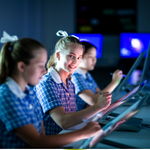
National Walk Safely to School Day (#WSTSD) is coming up this Friday 20th May. This is a day when all school children and adolescents are encouraged to walk and commute safely to school to encourage regular physical activity of students and the wider community.
According to Victoria University, physical activity increases the production of endorphins which helps create positive emotions. By walking to school or participating in some sort of physical activity, you can distract your mind from stress and reduce the risk of chronic diseases. By exercising daily, you can improve your quality of sleep and create healthy habits for yourself which will positively benefit your body mentally and physically.
Physical Activity can accumulate throughout the day and take place during leisure time, at work, while performing household chores, or gardening or as a form of transport.
This National Walk Safely to School Day aligns with the Active Schools Framework priority, ‘Active Travel’ and can be defined as any form of human-powered transport that is used to get from one place to another. It can include walking, running, cycling, scooting, skating, rollerblading or roller skating.
The National Physical Activity Guidelines state that 5-12-year-olds who have started school should do at least 60 minutes of moderate to vigorous physical activity each day. It should include a variety of aerobic-based activities such as netball and basketball or riding a bike. ON at least three days per week children should try and engage in activities that strengthen their muscles and bones to help them develop gross motor skill patterns. These could include: climbing on play equipment, playing schoolyard games like skipping and hopscotch, scooting, swimming and jumping on the trampoline.
Young people aged between 13-17 should also ensure that they complete 60 minutes of physical activity each day of moderate to vigorous activity and ensure they include some high-intensity aerobic activity. On at least three days a week, 13-17 olds should incorporate muscle-strengthening activities such as running, riding and some bodyweight exercises.
Adults aged 18- 64 should complete 150 to 100 minutes of moderate-intensity physical - such as a brisk walk, golf, mowing the lawn or swimming. This could be accumulated throughout the week. Alternatively, if adults prefer higher intensity activities like HIIT training or playing organised sport they should aim for 75 to 150 minutes of vigorous-intensity physical activity each week. Examples include; running, aerobics, fast cycling, soccer or netball.
How much physical activity do you complete each day??
Here are some ways you can implement active travel into your day
Walking to and from school Getting off public transport early and walking the rest of the way
Riding your bike/scooter/roller skates/skateboard to school or work Take the stairs instead of the lift Walk around and talk to your friends at lunch instead of sitting down Park further away from school/work/shops to get more steps in
Choose a café within walking distance to work Schedule Walking meetings Incorporate walking or bike riding to the park or beach as part of your family's physical activity We look forward to seeing more of our community using active transport to and from school and enjoying the benefits of participating in regular physical activity each day.
Year 11 VCE Physical Education Class and Mrs Boyd


Congratulations to Kate Henry (Year 11)! Kate was invited to participate at the National Schools Constitutional Convention this year which she did with passion and commitment. Kate spoke eloquently and represented Strathcona with distinction. We congratulate Kate on a wonderful effort. Well done, Kate!
The 27th National Schools Constitutional Convention was held at the Hotel Windsor in Melbourne from Tuesday 10th – Wednesday 11th May, 2022.
99 students from Government, Independent and Catholic schools from across Australia, covering metropolitan, regional, rural and remote locations attended the two-day activity.
Due to uncertainties surrounding COVID19, the students and supervising teachers gathered in their own states and territories in 11 hubs across Australia. Key speakers and facilitators gathered at the Museum of Australian Democracy at Old Parliament House in Canberra. Each hub’s participation was facilitated through Zoom.
The Convention topic that delegates were tasked to investigate was, “Does Australia need a Bill of Rights?” The plebiscite, conducted by the Australian Electoral Commission at the end of the Convention, declared that Australia should have a Bill of Rights.
Mary Petsinis, VCE Legal Studies teacher


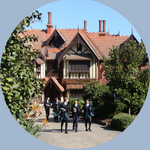
Listening to Melinda Tankard-Reist on Tuesday when she spoke to Year 9s about navigating our complex world, I was struck by all the messaging our teens receive and how conflicted they must, at times, feel.
Melinda's talk focused mainly on body image and the sexualisation and portrayal of young women in social media and advertising. Whilst confronting subjects were discussed, Melinda's central message was one of female empowerment, challenging students to scrutinise stereotypes and to demand respect. I do hope it provoked discussion in your house as it did in mine?
Camp banners were painted this week - with teams devising clever slogans and unifying items to wear. Groups 1,2 and 3 depart on Sunday at 8.30am from Main School, with Groups 4,5 and 6 departing on Monday and the last two groups on Tuesday. Fingers are crossed that the great weather forecast will hold - it is Melbourne after all!
See you on Departure Day!
Karyn



We hear daily reports about cars, climate change and computers. These three fields are referred to in terms of promise and fear, controversy and politics, and the future of work!
We are bombarded with news of fuel costs, electric cars and autonomous cars. There is the regular traffic report, accident reports and road toll statistics. But what about flying Cars? There are companies working on them and one of our speakers from our upcoming Centre for Learning Futures Event: Quantum computing, carbon capture and flying cars, Aidan Biggar, has worked as a flight tester for flying cars! He now flight tests drones for vaccine delivery to remote regions of the world.
Our news is filled with destructive weather events and the science and politics of all the carbon dioxide we pump into our atmosphere and oceans. We hear from champions of the environment, young like Gretta Thunberg and older like David Attenborough. We need to remove carbon dioxide from the air. There are ways of doing that and Elon Musk has contributed 100 million USD to what is claimed to be the largest incentive prize in history – the XPrize for Carbon Removal. Our speaker and Strathcona alumnus, Rebecca Phillips, is a team member of a student research group that won XPrize funding of $250 000 USD.
Our lives are dominated by computer technology through our communications, learning and entertainment. We are aware of the hazards of being constantly glued to our devices, the traps of social media, hackers and scammers, and have an insatiable appetite for increased processing and internet speeds. What if we could make computers that were more powerful – much more powerful? Mithuna, our final speaker, completed a PhD at Cambridge University exploring that question.
Cars are a major manufacturing process and the demise of car production in Australia was seen as a disaster by many, in part because of the loss of jobs in manufacturing. Fighting climate change is both a source of headlines about destroying jobs and creating jobs. Computers also have this dual contribution to the discourse on the future of work with the threat of computers or robots replacing human workers presented in tandem with the value of skills in digital technology for career opportunities.
Visions of the Future goes beyond the usual stories of cars, computers and climate change with a twist. Cars that fly, quantum computing and carbon capture are fields of active research and we will learn about them from three young creative researchers. Mithuna, Rebecca and Aidan bring their expertise and experiences from Cambridge University, Monash University and Stanford University and the Kitty Hawk and Swoop Aero companies.
I hope to see you at Strathcona at 6.30 pm on Thursday 19 May. For your free ticket book online here.
Ross Phillips, Senior Dean of Learning Futures

Junior School Disco – Saturday 21 May 2022
Save the date – booking and further details to follow.

You are warmly invited to Strathcona's Year 10 Play Production, Morgan Lloyd-Malcolm’s feminist play ‘Emilia’.
“I will never be at peace as long as I have no voice. I will not stop. I will not rest until I find words for all my daughters I will never know”
Emilia is a call to arms, to reject the injustice of silencing women’s voices and fight for the right to be heard. Inspired by the life of 17th century poet Emilia Bassano, who fought doggedly for her voice to be heard in the patriarchal confines of Elizabethan England, her battle is sadly still relevant today. Emilia is a symbol of women down the ages who have raged against the misogynist machine and struggled for equity.
This passionate play, written for an all-female cast, takes place in a theatrical dream landscape where the 17th and 21st centuries intersect. It is a wonderful play that places women centre stage. Tickets are available through Trybooking here.
Dates and times of performances in the Drama Studio are:
SHOW 1 – Thursday 2 June 2022, 7.00pm – 9.30pm
SHOW 2 – Friday 3 June 2022, 7.00pm – 9.30pm.
Adults $12, Students $10