The Power of Technology
Catherine Newton, Head of Digital Learning and Innovation

 Loading events...
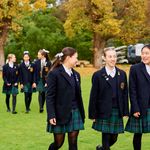
With our Continuous Online Learning Program in full swing, we are again reminded of the power that technology has to keep our community connected.
We know that the social, cultural and academic pillars of our school continue to thrive when we are learning remotely, due in part to the strength of our IT. We also know that during this time of increased reliance on technology in the home, families find themselves needing to carefully balance academic screen time, recreational screen time, and the family rules and expectations for digital health and wellbeing in the home.
It’s so important for technology boundaries to be firmly in place around our children and teens, and we think its timely to share some helpful reminders about managing this in the home:
It’s also worth noting the risks of the popular game called ‘Roblox’. Predators exist in the Roblox user base and they target children through the chat function of this platform. We don’t recommend children, or most teens, use this without strict controls and supervision. For a review of the risks, please see this article: https://www.commonsensemedia.org/blog/parents-ultimate-guide-to-roblox-0
You may be interested in the ‘Whole Family Workshop’ run by the Cyber Safety Project, which they are currently offering a 50% discount on during the lockdown (use coupon code LOCKDOWN) - go to: https://cybersafetyproject.com.au/families/
As always, should you want to touch base about cyber safety, digital wellbeing or the use of technology in your home, please do not hesitate to contact Mrs Catherine Newton who is the Head of Digital Learning and Innovation: cnewton@strathcona.vic.edu.au
Mrs Catherine Newton, Head of Digital Learning and Innovation

I was having a discussion about curriculum with a baby boomer recently. She is a regular Sky News viewer and was lamenting the latest Australian Curriculum, Assessment and Reporting Authority (ACARA) proposals for the Australian History curriculum.
She reflected that it was a shame that schools were moving away from teaching British History because it was such a core part of our own experience. I assured her it has been generations since Australian classrooms focused on British History. In all my own years in schools and universities, I have never once studied or taught British History! Her other perspective was that in teaching students the perspective of ‘invasion’ the curriculum authorities were pandering to political correctness. I politely disagreed.
One of the more interesting aspects of History is the notion of competing perspectives. For more than one hundred years scholars have been debating whether nationalism or imperial rivalry was the more significant cause of World War One. In my own Year 12 History class we debate whether the French Revolution was caused by the rising bourgeois class or the economic mismanagement of the King. So too it is appropriate to discuss competing perceptions of European arrival in Australia. The arrival of the First Fleet has been celebrated for centuries in Australian culture. But there has recently been a sense that these celebrations are one-dimensional and do not show an understanding of our First Nations Peoples’ perspective. Those of us old enough to remember the bicentennial celebrations in 1988, will remember how controversial such a celebration was. The protests in Sydney on January 26 1988 were the largest since the Vietnam War. Our students should understand the way the arrival of the First Fleet – an undeniably significant event – is perceived by different groups. These perspectives can sometimes be driven by ideology, or age, or ethnicity or experience, but all perspectives are valid. Students understanding why people perceive events in a certain way is a core part of their academic growth, and our own national stories play an important part in this.
There are other changes to the Australian curriculum that attempt to highlight more of our indigenous past. In Year 7, students will still learn about Ancient Egypt, Greece and Rome, but there will be a more explicit section on Ancient Australian History as well, focusing on cultural, social, and economic development including archaeology and heritage sites of significance. It is a mild rebalancing of what Year 7 students will be taught, but it is overwhelmingly positive.
First Nations People’s experiences in the 19th and 20th Centuries continue to be taught across the year levels. Australia must have a knowledge of its past and the capacity to debate differing perspectives for us to move forward as a society. Some countries do this exceptionally well. Travel through New Zealand and you will find signs are in both English and Maori and indigenous culture is deeply embedded. We need not be weighed down by the experiences of our forebears, but nor should we ignore them. Japanese History textbooks largely ignore Japanese atrocities against Korean women during World War Two, for example, and quite a few use the term ‘expansion’ rather than ‘invasion’ to describe military movements in the 1930s and 40s. We are not alone in confronting the difficulties of our past, but Reconciliation Week should be an opportunity for us to truly listen to the experiences and perspectives of others – not shy away from them.
Mr Scott Sweeney, Head of Humanities and VCE Coordinator

Last week, all 108 Year 9 students embarked on their Camp to Campus journey – a trek from the top of Mount Donna Buang, following the Yarra River, back to Campus in Hawthorn.
This trip, originally undertaken in 2012, was designed to provide a formative ‘rites of passage’ experience for each Year 9 student. It was thought that such an experience, placed at a time when adolescents are looking for ways to exhibit independence, take greater risks, develop self-identity and make lifelong connections, would be ideal. Countless hours are spent in the lead-up to the 5-day journey – groups are constructed, banners are made, teamwork is discussed, analysed, and demanded. A ‘practice day’ is included to ensure tents can be pitched, bikes can be ridden and trangias lit. There are moments when both teacher and student wonder if all the effort is worth it. Once the Camp groups depart in waves, into the unknown, it is inevitable that some students sink whilst others swim – quite magnificently in fact. The power of such an experience lies in what is learned along the journey, whether you sink or swim. Lessons come in many forms. They range from learning not to sleep in a ditch (water in a sleeping bag is never fun) to knowing how to tackle life’s ups and downs. How do I reset my mind and re-frame my negative thoughts? Real-world learning is an excellent teacher and lessons learned in this manner stick fast and well.
Teenagers today in Australia are, on the whole, a fairly informed lot. They know a lot, they process a lot and many of them have a lot. Very few of our students don’t have a mobile phone and plenty of data. Yet as connected and informed as all this suggests, many adolescents lack a sense of belonging. Outdoor journeys have a way of building community & culture. An understanding of their natural and human communities gives students a sense of place and their role in shaping it. Through connection to place, students develop stronger environmental attitudes and civic behaviours, such as the value of respect. In shaping the leaders of tomorrow, we want to raise a generation of active citizens who take care of their natural and human communities. Norwegian Louise Chawla, in her research paper ‘Learning to love the natural world enough to protect it’ (2006), expounds the view that children need constant exposure to the outdoors, opportunities to get muddy, and to make a positive connection with the environment. By building this connection, she argues, they are far more likely to look outwards and see the positives and possibilities of the future, shaped by good stewardship of the land.
Outdoor education also teaches valuable life skills authentically. To make it through the journey, not only do you need to listen to the theory – you need to be able to put what you are taught into practice. Studies have shown that students who learn outdoors develop: a sense of self, independence, confidence, creativity, decision-making and problem-solving skills, empathy towards others, motor skills, self-discipline, and initiative. It is the development of the whole person that is vital. In the week-long journey, there are plenty of opportunities to practice and develop skills. If you err pitching your tent on night one, there’s a fair chance that you will not repeat the mistake on the second night.
Another benefit of learning outdoors is that it raises expectations and reminds us not to take things for granted. Hugh van Cuylenburg, founder of ‘The Resilience Project’ suggests that in order to improve plummeting levels of mental health, teenagers need to intentionally practice three things – Gratitude, Empathy, and Mindfulness. There can be no better setting to do this than on an outdoor experiential learning journey. Camp leaders often raise issues such as homelessness, sleeping rough, and food security around the campfire, not to engender guilt, but to allow a student to express gratitude for what they have and to be mindful of their situation.
Finally, Camp2Campus allows students to showcase their talents in a different setting. It enables students to achieve success in wide-ranging areas. For a student who may struggle academically, Camp can be a way for them to showcase other aptitudes. Camp2Campus can also allow different students to be leaders amongst their team and to be recognised for skills not usually seen in an academic setting. When peers are afforded the opportunity of spending 5 days in each other’s company, there is a far greater understanding of the whole, authentic person. When we walk a mile in someone else’s shoes, or in this case, alongside them, there is less likelihood of making false judgements about a person based on an Instagram image.
Camp2Campus isn’t everyone’s cup of tea, and that is to be expected, but the salient life lessons garnered along the way should definitely be for all. Not only is it a liberating break from technology for many of our young people, but it is also the perfect opportunity to practice real-life learning in an environmentally majestic landscape, to display mindful behaviours and for them to start intentionally shaping the adult that they will become.
Karyn Murray, Head of Tay Creggan
Reference Chawla, L (2006), Learning to love the natural world enough to protect it.


Year 9 Debating Captain, Amy Johnson summarises Monday's round of online debating below.
On Monday 31 May, less than one week after Year 9 camp, all four of our debating teams researched, prepared and debated against various schools on the topic, “We should not subsidise medical treatments for smokers”.
Vinny Liang (1st speaker), Belle Gemmel (2nd speaker), and Jayna Wang (3rd speaker) debated for Team 1 on the affirmative side against Manor Lakes College. With the help of their other team members, Jemima Collings, Amy Johnson, Zoe Fotheringham and Cynthia Shi, they pulled off a win by 2 points and remain undefeated!
Team 2 with Cynthia Zhang (1st speaker), Teagan Briffa (2nd speaker) and Arya Gupta (3rd speaker) were ready to debate for the affirmative side however, Brauer college forfeited and they were unable to debate.
Team 3 debated for the Negative side and won! Their speakers were Liza Griffin (1st speaker), Heidi Gillon (2nd speaker) and Naomi Attala (3rd speaker) and their other teammates, Kate Zhang, Steph Tang and Sienna Maiolo assisted in writing speeches. The best speaker was awarded to Liza Griffin!
Team 4 debated for the affirmative side. Scarlett Jolly (1st speaker), Annie Zhao (2nd speaker) and Emily Khang (3rd speaker) were assisted by their other team members, Sophie Norman, Charlotte Pearse and Alec Marsland. Unfortunately, Team 4 lost against Doncaster Secondary College but still spoke really well and gave it their all.
A huge congratulations to all four Year 9 debating teams as they have worked hard to achieve amazing results and head into the finals.
Liza Griffin from Year 9 has been awarded an Honourable Mention in the 2021 Young Archie painting competition this year. (Last year she was a finalist).
Her portrait is of her ear nose throat doctor, Dr Ben Cook. You can view Liza's artwork: https://www.artgallery.nsw.gov...
We congratulate Liza for this outstanding achievement. Click the below image to enlarge.


As Melbourne returned to lockdown for the fourth time, Junior School psychologist, Ms Sharon Turner, spoke to ABC Drive host, Rafael Epstein about tips to assist parents in making remote learning a smooth process for all. Click the link below to listen.
The four Rs: Routines, Rest, Reinforce and Realistic.
1.Routines
Routines give children a sense of safety and security. As much as possible try and have the remote learning day scheduled like a school day. Get up at the same time (as this assists with ensuring the sleep-wake cycle are not altered during remote learning), have recess and lunch breaks at the scheduled school times and support your children to maintain social connections with friends through phone calls and monitored online communications.
2. Rest
Lockdowns can be stressful for everyone in a household, so maintaining good sleep routines assists all members of the household to cope better. Being well-rested ensures a greater likelihood that everyone will be able to manage their emotions when feeling stressed or overwhelmed.
3. Reinforce
It is important to role model good coping skills. Reinforce to your children that “we’ve got this” and “we’ve done it before and can do it again.” Convey the message that we will be back at school but at the moment we are doing some remote learning.
4. Realistic
Be realistic about what you can and can’t do to assist your child with remote learning, especially when you are also working from home and might have a number of students to be supported with remote learning. No one expects parents to become teachers. If there are problems with getting work done, don’t stress. Be kind to yourself. Work alongside teachers with emails to let them know of difficulties and remember you are working as a team!
Ms Sharon Turner, Junior School Psychologist
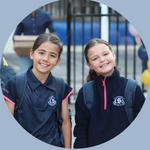
"There is no such thing as bad weather, only inappropriate clothing” (Ranulph Fiennes)
The ELC children remain on campus, embracing the outdoors and seasonal changes.
In past years I taught in a school that offered 20 acres of bushland for the children (and teachers) to roam and explore throughout the year. We would often venture outdoors, even with the fog touching the ground, our breath visible, rugged up and warm, ready for adventuring. Our mantra being, “There is no such thing as bad weather, only inappropriate clothing.”


While our suburban setting in Canterbury is different, there is still so much to explore within our own grounds, especially with the richness and beauty the change of season brings, surrounding ourselves with the wash of colours (and leaves!), puddles, rainbows, and reflections. We rarely stay inside just because it is cold, so the children need to be comfortable when venturing outside. Outdoor play is an important part of our program as it offers rich and varied experiences in a natural environment.
It highlights the seasonal changes, whether it be a visit to the beautiful maple tree in the courtyard, tending our vegetable patch or raking the enormous amount of leaves falling in our yard. There are the physical challenges of climbing, running, building and dancing, catching, digging, throwing and balancing. Outdoor play not only strengthens children’s motor skills and balance, but also their resilience to challenges which the physical environment brings. What better way to build the physical skills and emotional resilience than playing outside!
To ensure children can effectively engage in the outdoor program we ask that all children bring along a coat or jacket and a warm beanie to wear outdoors.
Mrs Jo Dowling, Director Early Learning Centre
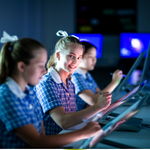
Congratulations to Elizabeth Tong, Meg Harrison, Emily Osborn, Kate Henry, and Maya Pillay for winning a bronze medal in the Ethics Olympiad.
The students were judged by Australian and international philosophers on their use of logic and reasoning in responding to a number of ethical quandaries. The students explored eight different scenarios, varying from Covid to K-Pop, over four heats throughout the day. The team performed with distinction.

Careers News for 3 June 2021 is now available.
Items in this edition include –
• News from ACU
o Undergraduate Psychology – What You Need to Know
o Sports Courses at ACU
• Bachelor of Arts Screen: Production at AFTRS
• Diploma of Paramedical Science at VU
• News from Monash University
o Do it with DATA: Tackling Climate Change
o Six ways to study Primary Education at Monash
o Engineering Makerspace
o Stories from Creative Arts and Architecture Graduates
o Discover Business Interactive Event
o Bachelor of Criminology
• Civil Engineering Degrees in Victoria in 2021
• Mechanical Engineering Degrees in Victoria in 2021
• Snapshot of La Trobe University in 2021
Please click here for this week's Career News. To visit the Careers page or view previous versions of Careers News click here.
Rain, hail or shine! Introducing our new Strathcona Umbrellas. They can be purchased through the Uniform Shop or via Flexischools for $38.00 each.


A reminder to parents to access SchoolTV via MyStrathcona for recent special reports and other helpful tools.
This month's edition is ‘Friendship & Belonging’. It is a great edition for parents and adult carers with children across all year levels.
Read the special report here.
Learning how to make new friends and keep them involves a number of skills every young person needs to understand and develop. For some these skills will come very naturally, allowing them to easily move between different friendship groups, sharing their experiences and opening up to new people. For others, this can be much harder to navigate. Belonging to a group that is like-minded with similar interests is highly beneficial to a young person’s wellbeing. It gives them a sense of security helping them feel valued which in turn builds their confidence.
SchoolTV is an online resource designed to empower you as parents with credible and sound information with realistic, practical ongoing support strategies. Click here to access the website.

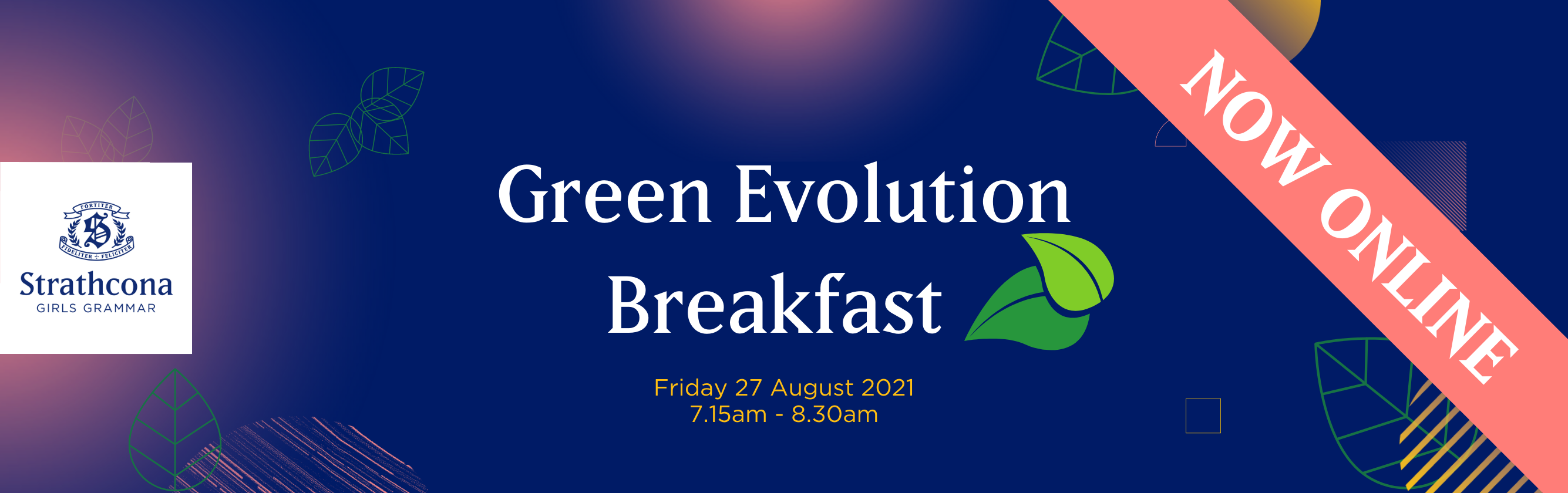
Tomorrow at 7.15am is Strathcona's Green Evolution Breakfast. We hope that you can join us for what is going to be a very informative event.
Hear from our panel of experts about climate change and rising sea levels, and be inspired by stories of action from local sustainability heroes. Learn about Strathcona’s own "Green Evolution’’ and commitment to a better Earth for girls and families everywhere.
Click here to register for this event.
Dr Kathleen McInnes ('79) - CSIRO Oceans and Atmosphere
Kathleen McInnes leads the Climate Extremes and Projections group of the Climate Science Centre in CSIRO's Ocean and Atmosphere business unit. Her work deals with how climate change will affect severe weather and coastal extreme sea levels through numerical modelling and climate model analysis with a focus on Australia and small islands. She has developed climate projections for impact and adaptation assessments to assist local government manage and adapt to climate change. Her contribution to this work was awarded Eureka award in 2003 and 2009. She has published over 200 refereed publications and other reports and articles and was a contributing author on the IPCC second, third, fourth and sixth assessment reports. She was a lead author on the IPCC Fifth assessment report chapter on Coastal Systems and Low-Lying Areas as well as a lead author on the IPCC Special Report on Managing the Risks of Extreme Events and Disasters to Advance Climate Change Adapation in 2012 and the IPCC Special Report on Oceans and Cryosphere in 2019. She currently serves as a co-chair of the World Climate Research Program Grand Challenge on Regional Sea Level Changes and Coastal Impacts. In 2017 she became a Fellow of the Australian Meteorological and Oceanographic Society and in 2020 she was awarded the CSIRO Medal for Lifetime Achievement.
Ninna K Larsen, Founder and Director - Reground
"Reground exists to help businesses help the environment and not let coffee, chaff or soft plastic waste end in landfill. Reground creates a community around waste resources to educate us all on how to make our future more sustainable.Reground changes our current waste disposal structure making it more resourceful for our pocket, people and planet.Reground exists to create positive change."Ninna is an expert in behavioural design, marrying her passion for sustainability and practicality to create real change in the waste and innovation space. She founded Reground in 2014 after experiencing the unnecessary coffee waste in Melbourne. Determined to see businesses stepping into the circular economy, she is creating a movement of businesses that puts impact over profit.
Matt Jones, Director - Mamachi
Matt owns and operates a number of Energy and Technology businesses and is driven to accelerate Australia's Energy and Carbon Transition. His passion and experience in Sustainability and Renewable Energy drives Matt to create impact and value for the Education Sector and other large organisations across the country. Through increasingly intelling and automated Building, Asset and Energy Management technologies Matt has delivered large scale programs and portfolio wide data management strategies nationally, achieving meaningful energy, emissions and building outcomes across most sectors.
Hollie Fields - Head of House, Strathcona Sustainability Team Leader
Hollie Fields has taught the Geography curriculum in schools across Victoria and Tasmania. She is committed to giving students on active role in sustainability education by providing them with knowledge and skills to foster change. Currently she teaches at Strathcona Girls Grammar where she leads the Senior curriculum for Geography (10-12). Alongside this, Hollie is a member of the School's sustainability committee, oversees the environment club and participates in the Boroondara Indigenous Network. Having presented at the Australian Geography Teachers Conference in 2019, Hollie engages with an Australia wide network of teachers to consider the best approaches for raising awareness for an ecological mindset. She believes everyone has a key role and that significant change is required to reduce the impacts of modern lifestyles on the natural environment.
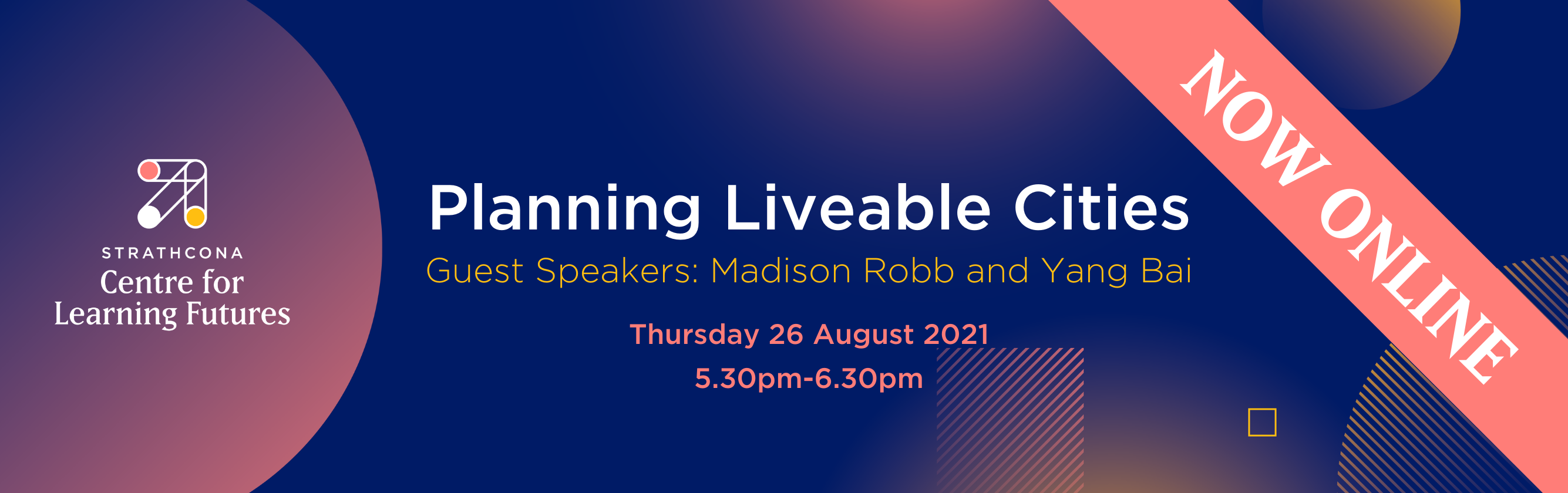
Planning Liveable Cities event is tonight 5.30pm - 6.30pm. Register now!
You are warmly invited to the Strathcona Centre Learning Futures event – Planning Liveable Cities.Hear about urban planning and the impact it has on lives now and into the future. Madison Robb and Yang Bai from Plan Melbourne will share about their careers in urban planning. We eagerly await their presentation where we will learn something that will have enormous impacts on our futures - the future of Melbourne.
Read more about our guest speakers below.
Madison Robb
Madison has over seven years' experience in urban planning, project management and Ministerial roles in State Government, delivering high-profile, large-scale planning and urban renewal projects, including Docklands and Fishermans Bend in Victoria and Perth City Link and Scarborough Beach in WA. Originally from Perth, Madison moved to Melbourne 4 years ago and took a short break from planning to explore cities as cabin crew for Virgin Australia, before COVID-19 hit the travel industry. Madison now works on delivering Plan Melbourne 2017-2050, the Victorian Government's strategy to guide the growth of Melbourne until 2050, including where people live and work and how we connect people to jobs and services.
Yang Bai
Yang Bai is a strategic planner working on the 20 minute neighbourhoods project in the Planning Department of Victoria. Her passion is in understanding the relationship between people and urban space, and also how we can create quality spaces. She is also interested in spatial data analysis and visualisation to facilitate communication and decision making. She was an engineer before moving to Melbourne to study Urban Planning. She is now also studying Urban Design.
Click here to register for this event.

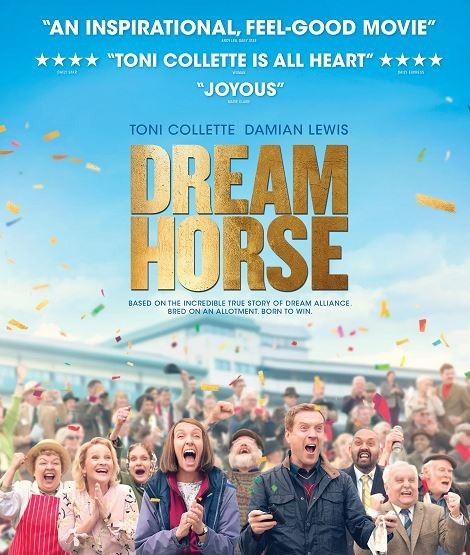
STRATHCONA MOVIE AFTERNOON - DREAM HORSE
We warmly invite you and your family to join us on Sunday 27 June 2021 at the Palace Balwyn Cinema for a special viewing of the film, Dream Horse.
Experience the inspiring true story of Dream Alliance, an unlikely racehorse bred by small-town bartender, Jan Vokes (Toni Collette). With very little money and no experience, Jan convinces her neighbors to chip in their meager earnings to help raise Dream and compete with the racing elites. Their investment pays off as Dream rises through the ranks and becomes a beacon of hope in their struggling community. Also starring Damian Lewis. Dream Horse is rated PG.
Only $14 per family member and refreshments can be purchased at the Candy Bar. Bookings can be made here
The session time will be confirmed closer to the day via email but it will be Sunday afternoon.
We hope you can join us!
On Sunday 27 June 2021 at 4:00 PM to 6:00 PM
Location
Palace Cinema Balwyn
231 Whitehorse Road, BALWYN, VICTORIA 3127
View our Child Safety Policy here